The Full-Stack Developer Roadmap for 2026: What to Learn, in What Order
A practical, no-hype full-stack roadmap for 2026: the fundamentals that still matter, the tools worth learning, where AI fits, and how to build a portfolio that gets you hired.
Every few weeks someone sends me a message that sounds like this: "Prof, I want to become a full-stack developer. Where do I start? There are too many things to learn."
They are right. There are too many things. Every week brings a new framework, a new AI tool, a new "you must learn this or you'll be left behind" thread. After five years of building real products — e-learning platforms, dashboards, a pharmacy point-of-sale system, inventory software and websites for churches and community organisations — and after training many beginners, I have a simple belief: the order you learn things matters more than the number of things you learn.
This is the roadmap I would follow if I were starting again today, in 2026.
First, what "full-stack" actually means
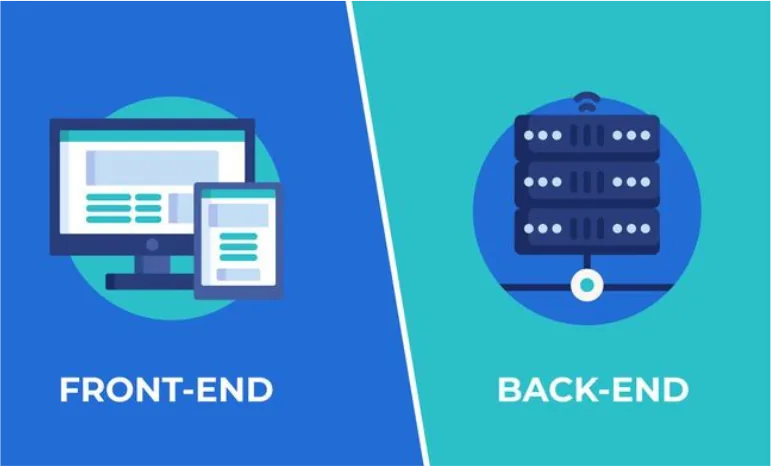
A full-stack developer can take an idea from a blank screen to a working product that real people use. That means you can:
- Build an interface people can use on a phone with a slow connection
- Store, protect and retrieve data
- Write the logic that connects the two
- Deploy it, monitor it and fix it when it breaks
You do not need to be an expert in everything. You need to be competent across the stack and deep in at least one area.
Stage 1: The web fundamentals (do not skip this)
This is where most people rush, and it is where most people later get stuck.
HTML and accessibility
Learn semantic HTML properly: headings, landmarks (header, main, nav, footer), forms, labels and buttons. Accessible HTML is not an "extra" — it is how you build pages that work for everyone, including screen-reader users and search engines.
CSS that you actually understand
Focus on the box model, Flexbox, Grid, responsive design with media queries, and CSS custom properties (variables). Modern CSS can do a lot that used to require JavaScript. If you understand layout, every UI framework becomes easier.
JavaScript, the language itself
Before any framework, be comfortable with:
- Variables, functions, arrays and objects
- Array methods like
map,filterandreduce - The DOM: selecting elements, handling events, updating the page
- Asynchronous code: promises,
async/awaitandfetch - Modules (
import/export)
Here is a small test of readiness. If you can write and explain this, you are ready to move on:
async function loadCourses() {
  const list = document.querySelector("#courses");
  try {
    const res = await fetch("/api/courses");
    if (!res.ok) throw new Error(`Request failed: ${res.status}`);
    const courses = await res.json();
    list.innerHTML = "";
    for (const course of courses) {
      const li = document.createElement("li");
      li.textContent = course.title;
      list.append(li);
    }
  } catch (err) {
    list.textContent = "Could not load courses. Please try again.";
    console.error(err);
  }
}
Notice the use of textContent instead of innerHTML for user data. Small habits like that will matter later when we talk about security.
Git and the command line
Learn to create a repository, commit, branch, merge and push to GitHub. Learn basic terminal commands. Every professional team uses version control, and your GitHub profile becomes part of your portfolio.
Stage 2: One frontend framework, learned well
Pick one component-based framework and stay with it for a while. React remains a very common choice in job listings, and Vue and Svelte are excellent too. The concepts transfer: components, props, state, effects, routing and forms.
TypeScript is worth adding at this stage. It catches many mistakes before your users do, and most modern codebases use it. You do not need to master advanced types — start by typing your function parameters, API responses and component props.
Stage 3: The backend and data
This is what turns a pretty page into a product.
Choose a backend path
You have two good options, and you will eventually learn both:
- A traditional server: Node.js with a framework like Express or a similar alternative, or another language such as Python or PHP. You write routes, handle requests and talk to a database.
- A serverless / Backend-as-a-Service approach: tools like Firebase or Supabase give you authentication, a database and hosting without managing servers. This is how I build many projects quickly, especially for organisations with small budgets.
Learn databases properly
- SQL (PostgreSQL or MySQL): tables, relationships, joins, indexes. SQL is one of the most durable skills in tech.
- NoSQL (Firestore or MongoDB): documents and collections, and how to model data around the way your app reads it.
APIs, authentication and security basics
Understand REST, HTTP status codes, JSON, and how authentication works (sessions, tokens, OAuth sign-in). Learn the basics of input validation, hashing passwords, and never trusting the client. Security is not a later topic — it starts with your first form.
Stage 4: Shipping to the real world
A project on your laptop is practice. A project on the internet is experience.
- Deployment: learn at least one hosting platform for static sites and one for backends or serverless functions.
- Environment variables and secrets: keep keys out of your code and out of GitHub.
- Performance: understand Core Web Vitals and test on a mid-range phone, not just your laptop.
- SEO basics: titles, meta descriptions, clean URLs, structured data.
- Testing: start with a few tests around your most important logic. Something is better than nothing.
Where AI fits in 2026
AI coding assistants are now part of everyday development, and you should learn to use them. But here is my honest advice: use AI to go faster on things you understand, not to skip things you don't.
Ask it to explain code, suggest tests, review your functions or generate boilerplate. Then read every line it gives you. The developers who will do well are the ones who can judge whether the AI's answer is right — and that judgement comes from fundamentals.
Build projects that solve real problems
Tutorials teach syntax. Projects teach engineering. Here is a progression I recommend:
| Stage | Project idea | What it teaches |
|---|---|---|
| Fundamentals | Personal portfolio site | HTML, CSS, responsive design, deployment |
| JavaScript | Expense or task tracker | DOM, events, local storage |
| Framework | Quiz or course app | Components, state, routing |
| Backend | Inventory or booking system with login | Auth, database, CRUD, security rules |
| Full product | A tool for a real local business or group | Requirements, feedback, maintenance |
That last row is where real growth happens. When I built a point-of-sale system for a pharmacy and an inventory system, the hardest lessons were not about code. They were about understanding what users actually needed, handling messy real-world data, and supporting software after launch.
A realistic weekly rhythm
You do not need ten hours a day. You need a rhythm you can keep:
- Learn (3–4 sessions a week): one focused topic per session
- Build (2–3 sessions a week): apply what you learned to a project
- Share (once a week): push to GitHub, write a short post, or explain what you learned to someone
- Review (once a month): look back, update your portfolio, adjust your plan
Your checklist
- I can build a responsive, accessible page from scratch
- I can explain
async/awaitand handle errors from an API call - I use Git daily and my projects are on GitHub
- I know one frontend framework well enough to build a multi-page app
- I can design a simple database and protect it with proper rules or validation
- I have deployed at least one full-stack project that someone else uses
- I use AI tools, and I review and understand everything they produce
Conclusion
The full-stack path is long, but it is not mysterious. Start with fundamentals, go deep on one framework, learn data and security seriously, and ship real projects. Do it consistently and you will be surprised where you are a year from now.
Which stage are you at right now — and what is the one thing you are stuck on? Drop a comment below. I read them, and your question might become my next post.

Written by Benjamin Amoako (ProfJero)
Full-stack developer and IT trainer from Cape Coast, Ghana. Co-Founder of Digital Bridge Initiative and Founder of ProfJero Hub. I write about building real software and growing in tech.
0 Comments